
Every author secretly imagines it.
The call from Hollywood. The option deal. Their characters rendered in widescreen by a director they admire, their world realized in a way they never could have alone.
Most never get there — not because their books aren’t good enough, but because they make a category error at the very start. They try to sell a book to people whose job is to buy stories.
These are different things, and the difference matters more than almost anything else in the pitch.
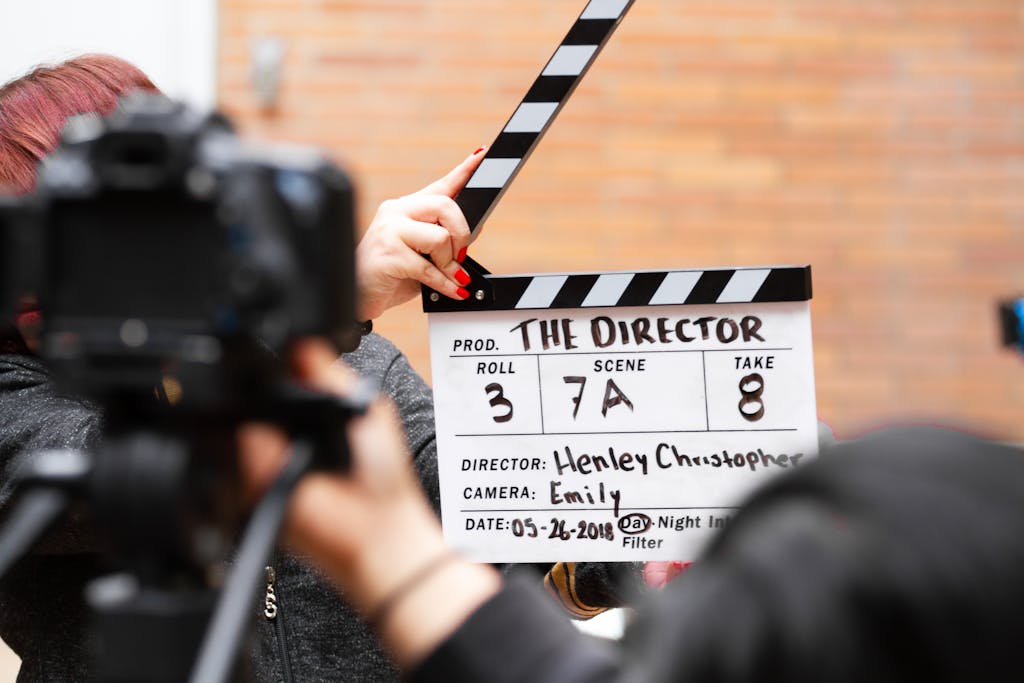
Hollywood doesn’t read. It listens.
Publishing is a reader’s industry. Agents and editors sit with manuscripts. They linger in prose. They appreciate the slow accumulation of character detail over two hundred pages.
Film and television don’t work like that.
A producer at a mid-sized production company might field thirty pitches a week. A development executive at a streamer might be evaluating fifty projects simultaneously, at various stages, in various genres, across multiple formats. They are not reading — they are pattern-matching. They are asking, as fast as possible: does this have the shape of something that works?
That’s your first and most important insight as an author entering this world. You are not being evaluated on prose quality, thematic complexity, or narrative depth. You are being evaluated on concept clarity — how fast can someone understand what this story is, who it’s about, and why an audience would care.
The authors who do well in this world are not always the best writers. They’re the ones who understand that a pitch is a different kind of writing — one that compresses a hundred thousand words into a few sharp sentences without losing what made the book worth writing in the first place.
The logline is doing more work than you think
Ask most authors for their logline and they’ll give you a synopsis in disguise.
“It’s about a woman in 1940s London who discovers her late husband wasn’t who she thought he was, and as she tries to uncover the truth, she’s pulled into a web of espionage, betrayal, and ultimately has to decide who she can trust.”
That’s not a logline. That’s a summary of act one.
A logline is a promise. It tells someone what kind of experience they’re buying into, who they’ll be rooting for, what’s at stake, and — crucially — why this story couldn’t have happened to anyone else in any other circumstance. It’s usually one sentence. Two, if you’re generous.
Here’s the difference in practice:
Summary version: “A retired hitman tries to reconnect with his estranged daughter while being hunted by his former employer.”
Logline version: “The world’s most dangerous man discovers the one thing he can’t protect — his daughter’s respect — just as his past comes to collect.”
Same story. Completely different emotional register. The second version tells a producer exactly what kind of movie they’re looking at: a tense action thriller with an emotional core that justifies the spectacle.
Your logline is the foundation everything else sits on. If you can’t write one, you don’t yet understand your story the way a producer needs you to.

What actually makes a story “screenable”
Producers have a mental checklist, even if they’d never articulate it this way. When they hear a pitch, they’re running it against a set of invisible criteria. Understanding those criteria doesn’t mean you should reverse-engineer your book to fit them — most of the time, the bones are already there. It means knowing how to talk about your story in language that answers the questions before they’re asked.
A clear protagonist with a specific want. Ensemble casts and multiple POVs are a feature in literary fiction. In a pitch room, they’re a complication. Producers want to know whose story this is. Not because they’ll necessarily strip the other characters out, but because they need to understand the emotional engine. Who is this about? What do they want? What’s stopping them from getting it?
A world that’s easy to visualize and hard to ignore. Concept-driven stories tend to travel well from page to screen. A locked-room mystery. A survival story on a sinking ship. A thriller set inside a cult. These aren’t just plots — they’re containers. The setting creates inherent tension, visual interest, and immediate audience investment. If your story is largely internal — a character working through grief across a series of loosely connected vignettes — you have a harder pitch ahead of you, though not an impossible one.
Escalating, visual conflict. Novels can live in subtext. Film and television can’t, at least not predominantly. Conflict has to be externalized, dramatized, made physical or confrontational in ways the camera can capture. This doesn’t mean your nuanced, interior novel can’t become a great film. It means the pitch has to surface the external conflict that drives the structure, even if the internal journey is what gives it weight.
A reason why now. This one gets underestimated. Producers are thinking about the audience on the other side. They want to know why this story matters today — why this particular moment makes it urgent, relevant, impossible to ignore. A story about surveillance and privacy hits differently in a post-Snowden world. A story about community and isolation resonates after years of pandemic-era disconnection. You don’t need to make your book trend-baiting. But you should be able to articulate what makes it timely.
The virtual pitch: what’s changed, and what hasn’t
Before 2020, pitching to film and TV executives generally meant getting yourself to Los Angeles or London, attending the right events, and hoping you’d landed in the right room at the right time.
The pandemic changed that. Virtual pitching became normalized — not as a consolation prize, but as a legitimate and often preferred format. Writers’ festivals started hosting pitch sessions over Zoom. Streaming platforms began accepting virtual submissions through organized programs. The geographic barrier, while not gone, got lower.
What this means for authors is both exciting and sobering.
The exciting part: you can now pitch from anywhere in the world. The literary festivals that were previously inaccessible unless you could afford to travel are, increasingly, accessible from a home office. Programs like the Black List, Stage 32, and specialized adaptation festivals have created structured pathways for authors to connect with producers without needing industry connections first.
The sobering part: lower barriers to entry means more competition, not less. The virtual pitch hasn’t democratized Hollywood — it’s just moved the filtering mechanism. You’re still competing against hundreds of other writers. You’re just doing it over video call.
And video calls have their own skill requirements, which most authors haven’t thought about. Your background matters. Your lighting matters. Whether you sound confident and enthusiastic about your own story — or tentative and over-apologetic — matters a great deal. Producers are making a judgment call not just about the material, but about you: are you someone they could work with across a development process that might take years?
The pitch meeting structure that works
There’s no universal formula, but there is a structure that most experienced author-pitchers converge on. Here’s the version that works:
Open with the hook, not the backstory. Don’t explain how you came to write the book. Don’t describe the research process. Start with the story itself: the logline, the world, the character. Give them a reason to lean in before you give them context.
Spend the most time on act one. Producers aren’t evaluating the whole story in a pitch — they’re evaluating whether the premise has legs. They want to understand the setup: who the protagonist is, what world they inhabit, what disrupts the status quo, and what journey that disruption sets in motion. A tight, compelling act one summary does more work than a breathless blow-by-blow of the entire plot.
Signal the emotional genre, not just the plot genre. “It’s a thriller” tells a producer very little. “It’s the kind of thriller that makes you feel like you’re running out of time even when you’re sitting still” tells them something they can use. The emotional genre — the feeling the story delivers — is often more useful information than the categorical label.
Tell them what format you see it in, and why. Is this a film? A limited series? An ongoing series? Have a point of view on this, and be ready to defend it. “I see it as a limited series because the central mystery unfolds in layers that reward a season-length structure” is a more useful contribution than “I think it could work in any format.”
Leave time for the conversation. The best pitches end with a producer asking questions — about the world, the characters, the ending. That’s the signal. Questions mean interest. If you’ve talked for the entire meeting without creating space for dialogue, you’ve given a lecture, not a pitch.
What separates the authors who get optioned from those who don’t
It’s tempting to believe that the quality of the source material is the primary variable. That the best books get the deals.
That’s not wrong, exactly — but it’s incomplete.
The authors who consistently move from pitch rooms to option agreements tend to share a few characteristics that have less to do with writing talent and more to do with how they understand the industry they’re trying to enter.
They’ve watched a lot of film and television in their genre. They can name comparable titles — recent ones, successful ones — and explain what their work shares with those titles and what makes it distinct. They’re not trying to replicate existing hits. They’re locating themselves in a map that producers already understand.
They’re collaborative without being a pushover. Development is a long process involving multiple stakeholders, many of whom will have opinions about how to change your story. Authors who can engage with this process — who understand that adaptation is transformation, not transcription — are dramatically easier to work with than those who treat every suggested change as an attack on the work.
And perhaps most importantly: they pitch like they already belong in the room.
Not arrogance. Not false confidence. Just the settled self-assurance of someone who knows their story well, understands its value, and has prepared for this conversation the way a professional prepares for anything important.
Hollywood has no shortage of good stories. What it perpetually needs is people who can communicate those stories in language that travels.
That’s the skill most authors underestimate. And it’s entirely learnable.
The practical starting point
If you’ve read this far and you’re thinking about your own manuscript, here’s where to start — before you seek any pitch opportunities at all.
Write your logline. Then rewrite it. Then ask someone who hasn’t read the book whether they understand the story and want to know what happens. If they don’t, your logline isn’t working yet.
Research the formats that are buying in your genre right now. Not five years ago — now. The streaming landscape has shifted considerably. What Hulu was commissioning in 2019 is not what they’re commissioning today. Know the market before you try to sell into it.
Find the comps. Not to flatter yourself, but to understand the conversation you’re entering. If your book sits between Sharp Objects and The Miniaturist, say so. That sentence alone communicates genre, tone, audience, and quality level more efficiently than a paragraph of description.
And then — most importantly — understand what you’re willing to accept. Adaptation means change. Casting decisions you don’t control. Structural alterations. A different ending. An author who goes into the process expecting fidelity will be continuously disappointed. An author who goes in understanding that the goal is to create something great in a different medium — using the source material as a foundation, not a constraint — will almost always have a better experience.
The page and the screen are not enemies. They’re just different languages.
The writers who thrive are the ones who take the time to become fluent in both.